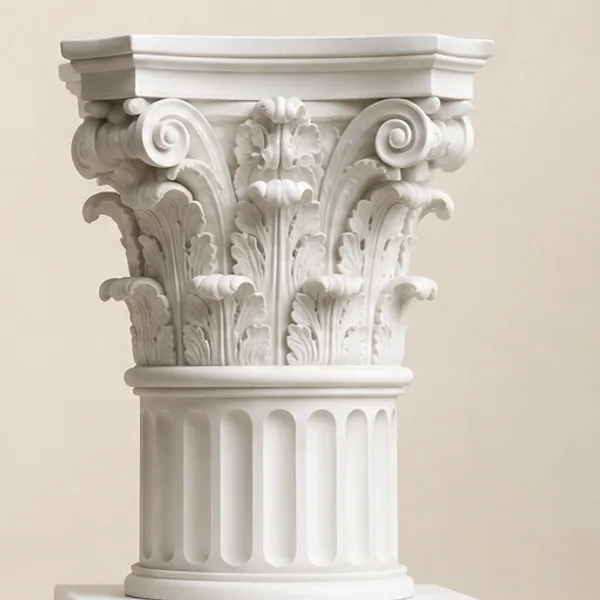
Ancient architecture was never experienced as abstract white geometry. Stone type, tooling, paint, metal attachments, sunlight and weather all changed its surface. Today, survival and display conditions change it again.
Material is part of the record
The Met notes the use of limestone, tufa, wood and marble in Greek architecture. Material affects span, carving, finish and aging. A white digital surface that ignores grain and joins may communicate shape, but it cannot document construction.
Begin a material note with identification and evidence: quarry study, conservation report, catalogue entry or direct examination. “Looks like marble” is not the same as an analyzed stone.
Carving edits light
Flutes, undercut leaves and molded bands create small cycles of highlight and shadow. Their effect changes with sun angle and viewpoint. Photographers and illustrators can reveal a profile with grazing light, but dramatic lighting may also exaggerate depth.
Record whether an image is documentary, interpretive or diagrammatic. A neutral study isolates contours; a theatrical render can explain visual impact. Neither should silently stand in for the other.
Ancient color requires evidence
Scientific examination has identified surviving pigment on ancient sculpture and architectural elements. The Met’s research on a Greek sphinx demonstrates how imaging and analysis can support a reconstruction while also making uncertainty visible.
This evidence challenges the assumption that antiquity was uniformly white. It does not authorize any vivid palette on any object. A responsible color proposal identifies the analyzed traces, comparison material and degree of inference.
Distinguish surface from presentation
Museum lighting, digital grading and a publication background all influence color perception. Our image combines a pale model with warm copper and violet reflections chosen for this journal’s visual language. Those reflections are editorial design, not archaeological pigment.
A good caption says what the object or model is, how the image was made and what has been added. That short record lets readers enjoy the image without mistaking atmosphere for evidence.
Reading takeaway
Treat material, surviving finish and modern presentation as three separate layers of the image.
Sources and scope
These references support the factual frame of this article. They do not endorse its contemporary illustrations or editorial interpretation.
- The Metropolitan Museum of ArtArchitecture in Ancient Greece
Temple plans, materials, painted decoration and the identifying relationships of the classical orders.
- The Metropolitan Museum of ArtNew Research on the Color of Greek Sculpture
Scientific examination of surviving pigment and the evidence-led reconstruction of ancient color.
- British MuseumAn introduction to the Parthenon and its sculptures
A documented example of pediments, metopes and a frieze arranged on a temple.